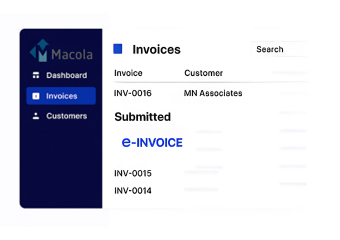
Supporting Macola Financial Operations
How Advintek Fits Macola Processes
- Order Fulfillment Review: Macola order and shipment activity can identify completed commercial transactions requiring invoice processing.
- Customer Billing Preparation: Relevant account, product, quantity, pricing, tax, and VMI information is gathered from originating Macola records.
- Receivable Record Association: Customer billing information can retain connections with corresponding receivable activity inside established financial processes.
- Invoice Document Assembly: Prepared commercial information is structured into electronic invoice documents for applicable recipients and VMI workflows.
- Financial Reference Preservation: Source references remain associated with processed documents, supporting investigation across Macola financial records.
- Process Outcome Handling: Relevant processing information can support subsequent accounting activities without replacing Macola’s established financial responsibilities.
Where Advintek Extends Macola
Advintek supplements Macola with specialized electronic invoicing capabilities, connecting commercial transactions to structured document handling while preserving established sales, inventory, purchasing, receivables, and accounting functions.
- Connects fulfilled orders with invoice documents
- Links receivables with customer invoices
- Associates inventory details with billing
- Connects purchasing records with supplier documents
Business Benefits Across Macola
- Order Billing Efficiency: Completed commercial transactions can progress toward invoicing without repeatedly reconstructing information for finance teams.
- Receivables Visibility: Linked invoice references provide clearer connections between customer billing documents and receivable records.
- Inventory Billing Context: Product and fulfillment information gives finance teams stronger context when examining merchandise-related invoices.
- Purchasing Traceability: Supplier documents can retain connections with purchasing activity, helping teams investigate related financial transactions.
- Customer Account Clarity: Consistent account references help teams understand invoice relationships across Macola customer and financial records.
- Accounting Continuity: Electronic invoice processing can complement Macola accounting structures without replacing established financial ownership or controls.
Capabilities for Lithuania Invoicing
Receivable Reference Mapping
Customer receivable references can remain associated with electronic invoices throughout connected financial processing.
Fulfillment Detail Linking
Shipment and fulfillment references can accompany invoices for subsequent commercial and accounting verification.
Account Relationship Tracking
Customer account relationships can remain connected across electronic documents and originating Macola records.
Macola Business Processes in Lithuania
Businesses using Macola can connect customer billing, fulfillment, inventory, purchasing, receivables, payables, and accounting activities through an electronic invoicing environment designed around existing ERP relationships.
- Connect fulfilled orders with customer invoices
- Trace receivables through electronic documents
- Review inventory alongside billing activity
- Relate purchases to supplier documentation
Build a More Connected Billing Process
Connect Macola financial workflows with Lithuanian e-invoicing through Advintek.
Discuss your Macola integration requirements with specialists.
Ready e-Invoice System
Frequently Asked Questions Macola ERP E-Invoicing Lithuania
How can Macola sales orders support customer invoicing?
Macola sales orders can provide the commercial foundation for customer invoices, including account information, products, quantities, pricing, and related fulfillment details. Where the configured workflow uses completed fulfillment as a billing reference, relevant Macola records can supply the information required for electronic document preparation while preserving the original sales transaction inside the ERP.
What role can Accounts Receivable play in Macola e-invoicing?
Accounts Receivable provides important financial context after customer billing information has been established. An integration can associate electronic invoice records with relevant receivable references, allowing finance teams to connect documents with customer balances and originating transactions. This relationship supports financial investigation without shifting receivable ownership away from Macola.
Can Macola inventory records provide invoice context?
Yes. Macola inventory information can help explain the products associated with customer billing, particularly where invoices originate from fulfilled merchandise transactions. Relevant item identifiers, quantities, locations, and fulfillment references can provide supporting context for electronic documents. The precise information transferred depends on the organization’s Macola configuration and invoicing requirements.
How can Macola purchasing information relate to supplier invoices?
Purchasing records can establish the connection between supplier activity and corresponding financial documents. Where supplier invoices are included in the integration scope, relevant purchase information can provide context for document processing and later review. Macola can remain the source for purchasing activity while Advintek handles the electronic invoicing layer.
Which Macola financial information should integration teams examine first?
Teams should examine customer accounts, sales transactions, fulfillment records, receivables, supplier records, purchasing documents, inventory relationships, tax attributes, and accounting references. The review should also identify which Macola records represent the authoritative source for each business process. This creates clearer integration boundaries and helps determine which information should accompany electronic invoices.